
Doors & Trim
Doors, trim and frames
The detail work that decides whether a room reads as freshly painted or genuinely well finished.
- Free Quotes
- Residential & Commercial
- Local Melbourne Painters
Overview
Trim takes more handling than any other painted surface in a house. Skirting boards get vacuumed into, door frames get pushed, and doors themselves are touched every day. That means trim needs a harder-wearing system than walls, and it needs to be prepared to accept one.
We paint interior doors, skirting boards, architraves, door frames, window frames and built-in joinery, working to a crisp line where the trim meets the wall.
Summary
At a glance
- Service
- Doors, Trim & Frames — Skirting boards, architraves, door and window frames and doors, finished in a durable enamel system.
- Suitable for
- Doors, skirting boards, architraves and window frames, whether previously finished in enamel or in an acrylic system.
- Finish options
- Satin — a softer, contemporary look that still cleans well, Semi-gloss — the most common choice for trim and doors and Gloss — the most durable and easiest to wipe, and the least forgiving of surface flaws.
- Preparation
- Existing coatings are cleaned, de-glossed and sanded, damage is filled, and an appropriate undercoat is applied so the finish coat bonds rather than sitting on a glossy surface.
- Where it is offered
- Doors & Trim is offered across Melbourne and surrounding suburbs, generally within about 40 km of Balwyn.
- Quoting
- Doors & Trim is quoted in writing at no charge, after an inspection of the actual surfaces.
What we cover
What's included
Interior doors
Doors taken off their hardware where practical so edges are finished properly rather than painted around.
Skirting boards
Cleaned, sanded, filled and caulked at the wall junction for a straight, shadow-free line.
Architraves and door frames
Prepared and coated with attention to the mitred joints, where filler and caulk usually fail first.
Window frames and reveals
Sashes, frames and reveals cut in by hand, with glass cleaned off rather than left scraped.
Built-in joinery
Shelving, wardrobes and cabinetry prepared with an adhesion primer suited to the existing finish.
Built-in joinery
The work
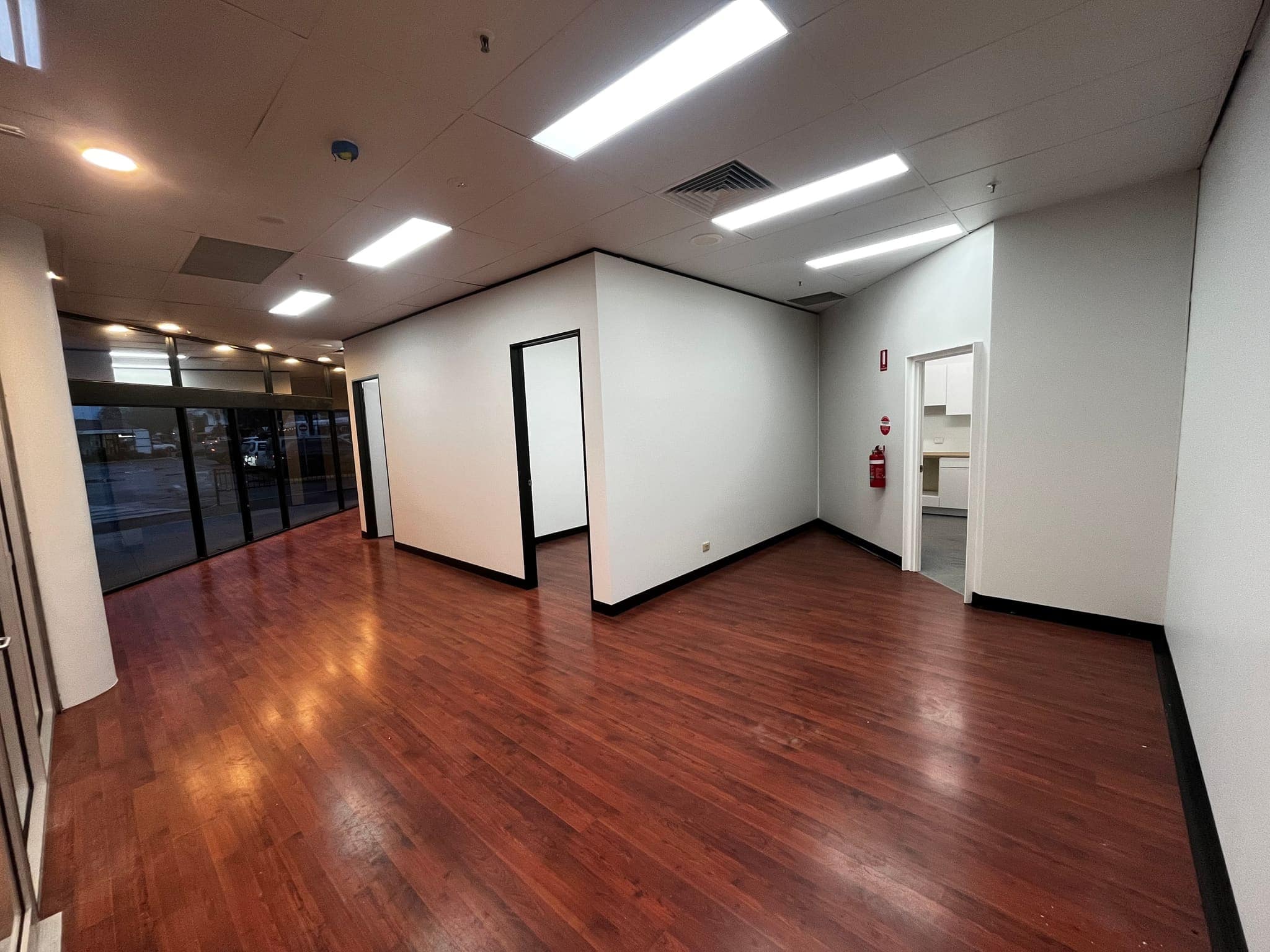
Doors & Trim photos
Corridor with black door frames and skirting Black frame cut in against a white wall Mint green door at the end of a corridor Sliding barn door and walls in white White walls with black skirting
Our process
How the work runs
Step 1: Remove or mask hardware
Handles, hinges, strike plates and stops removed where practical, or masked cleanly where removal is not sensible.
Step 2: Sand
Existing coatings keyed back so the new system has something to grip. Gloss surfaces in particular will not hold a coating applied over an unsanded film.
Step 3: Fill and caulk
Dents, splits and open mitres filled; gaps between trim and wall sealed with a flexible caulk so the line stays clean as the house moves.
Step 4: Prime
Bare timber, filled areas and any substrate that needs adhesion help are primed before the finish coats.
Step 5: Finish coats
A durable enamel system applied and laid off carefully, then hardware reinstated once the coating has hardened enough to handle.
Why it holds up
What you get
- Hardware removed rather than painted around wherever practical
- Wall-to-trim junctions caulked so the line stays crisp
- Enamel systems chosen for handling and cleaning, not just appearance
- Doors finished on their edges, not only their faces
Finish options
- Satin — a softer, contemporary look that still cleans well
- Semi-gloss — the most common choice for trim and doors
- Gloss — the most durable and easiest to wipe, and the least forgiving of surface flaws
Questions
Common questions
If your question is not here, call and ask. We would rather explain it properly than have you guess.
Should trim be a different colour from the walls?
It is a matter of taste rather than a rule. A trim tone close to the wall colour reads calm and contemporary; a crisp white against a deeper wall gives more definition. What matters more is the sheen contrast, and we can talk that through on site.
How long before I can close the doors again?
Enamel is touch-dry well before it is hard. Doors can generally be used the same day, but we will let you know when it is safe to close them fully against a frame, because a coating that has not hardened will stick.
Can you paint over stained or varnished timber?
Yes, provided the surface is sanded to break the sheen and an appropriate adhesion primer is used. Skipping either step is the most common reason painted joinery peels later.
Where we work
Doors & Trim across Melbourne
We work throughout Melbourne and surrounding suburbs, generally within about 40 km of the city. If your property sits outside that, ask — we travel for larger projects.
Balwyn · Brighton · Camberwell · Kew · Hawthorn · Malvern · Richmond · South Yarra · Toorak · Armadale · Canterbury · Surrey Hills
Explore
Related services
- Learn more
Interior Painting
Walls, ceilings, trim, doors and built-ins, finished cleanly in homes people are still living in.
- Learn more
Kitchen Cabinets & Built-Ins
Cabinet refinishing for kitchens, laundries, wardrobes and built-in joinery, using a coating system built for handling.
- Learn more
Walls & Ceilings
Wall and ceiling repainting over repaired, sanded and primed surfaces, with crisp cut-in lines.
- Learn more
Colour Consultation
Help choosing a scheme that works in your light, on your surfaces and in your street.
Free, no-obligation quotes
Get a written quote for your painting job
Tell us what needs painting and send a few photos. We will inspect the property and put a written, itemised quote in front of you — in Australian dollars, with the scope spelled out.