
Surface Preparation
Surface preparation
The part of the job you never see, and the only reason the part you do see lasts.
- Free Quotes
- Residential & Commercial
- Local Melbourne Painters
What is surface preparation?
Surface preparation is everything done to a surface before a finish coat is applied: washing, scraping back to sound material, repairing cracks and damage, sanding, and priming with a primer chosen for that substrate. It is the part of a paint job that decides how long the result lasts, and the part that is invisible once the work is finished.
Overview
Paint does not fix a surface. It records it. A crack that was filled but not sanded flat will show as a ridge; a wall that was not washed will hold the coating badly; a glossy surface that was not keyed back will let the new coating peel away in sheets a year later.
Preparation is the majority of the labour on most jobs, and it is where the difference between quotes usually sits. Two quotes for the same house can differ substantially and both be honest — one has costed the preparation the surfaces actually need, and one has not.
That is why our quotes set out the preparation scope in writing. You can then compare quotes on the same basis, rather than on a single number.
Summary
At a glance
- Service
- Surface Preparation — Washing, crack repair, sanding, caulking, wallpaper removal, priming and sealing — the work a finish depends on.
- Suitable for
- Any surface being repainted, and any surface where a previous coating has failed and the cause has not been identified.
- Surfaces and systems
- Interior and exterior fillers matched to substrate and movement, Flexible sealants for junctions, frames and control joints, Adhesion primers for glossy and low-porosity surfaces, Stain-blocking primers for water marks, tannin and smoke damage, Alkali-resistant sealers for masonry and fresh render and Mould treatments for affected surfaces.
- Preparation
- Preparation is the service: washing, scraping back to sound material, filling and repairing, sanding, and priming with a primer chosen for that specific substrate.
- Where it is offered
- Surface Preparation is offered across Melbourne and surrounding suburbs, generally within about 40 km of Balwyn.
- Quoting
- Surface Preparation is quoted in writing at no charge, after an inspection of the actual surfaces.
What we cover
Also included
Pressure washing and cleaning
Removing dirt, chalking, salt deposits, mould and lichen. Coatings applied over a contaminated surface fail at the bond, no matter how good the product is.
Crack repair
Cracks raked out, filled and finished flush. Where a crack pattern suggests ongoing structural movement we say so rather than filling it and letting it reopen.
Caulking and gap sealing
Flexible sealant at wall-to-trim junctions, around frames and at joints, so the line stays clean as the building moves and water cannot get behind the surface.
Surface smoothing and sanding
Filling sanded flat and feathered, existing coatings keyed back, and raised grain removed so the finish sits evenly.
Wallpaper removal
Paper removed, adhesive residue washed off and the wall made good. Painting over wallpaper is a compromise that almost always shows.
Adhesive and residue cleanup
Old adhesive, hooks, tape residue and previous repairs removed and the substrate returned to a paintable condition.
Priming
Bare, repaired, porous, stained or previously uncoated surfaces primed with a product matched to the substrate and the coating going over it.
Sealing
Sealers on porous masonry and stain blockers where water marks, tannin or nicotine would otherwise bleed through the finish.
Protection and masking
Drop sheets, furniture covers, hardware removal and masking — protecting the property is part of preparation, not separate from it.
The work
Surface Preparation photos
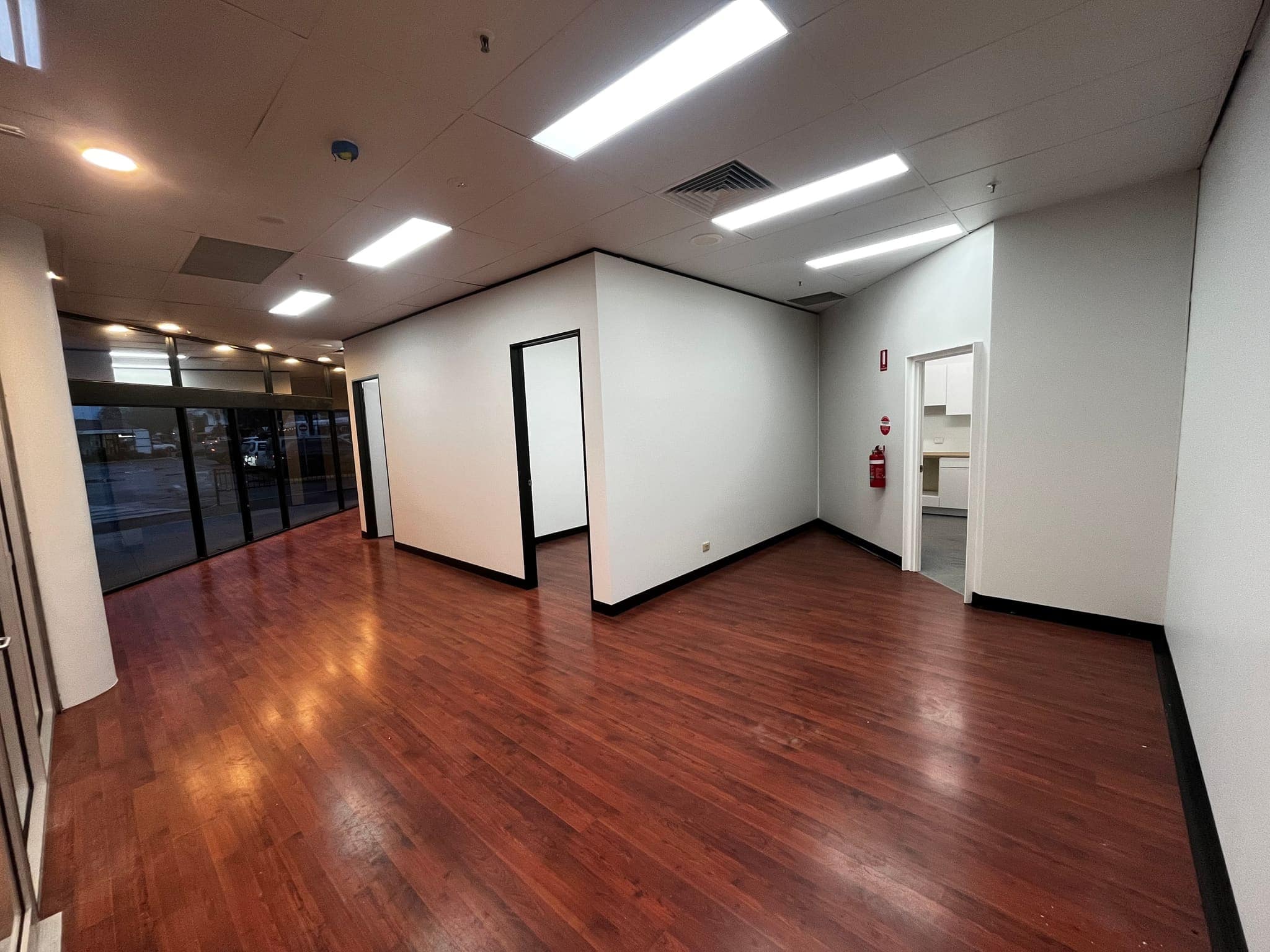
Ceiling patched and sanded before any coating Before: stepped cracking and protection laid out Floor protected through the repaint Walls and ceiling finished before flooring Doors masked so only the frames take the spray
Our process
How the work runs
Step 1: Assess the substrate
What the surface is made of, what is already on it, how well that is adhering, and whether there is moisture or movement behind it.
Step 2: Protect
Floors, furniture, fittings, gardens and adjoining surfaces covered before any dust or water is generated.
Step 3: Clean
Washing, degreasing or pressure cleaning as the surface requires, then allowed to dry to a suitable condition before work continues.
Step 4: Remove what has failed
Flaking and lifting coatings scraped back to a sound edge and feathered, so the repair does not telegraph through the finish.
Step 5: Repair and fill
Cracks, holes, splits and damage made good with fillers suited to the substrate and the exposure.
Step 6: Sand
Filling sanded flat, existing sheen keyed back, and surfaces dusted down so nothing is trapped under the coating.
Step 7: Seal and prime
The right primer for the substrate and the finish going over it — adhesion, stain blocking, alkali resistance or porosity control as required.
Why it holds up
What you get
- Preparation scope written into the quote so quotes can be compared fairly
- Failed coatings removed and feathered rather than coated over
- Substrate moisture and movement raised before coating, not after
- Primers matched to the substrate rather than one product used everywhere
- The property protected before dust or water is generated
Systems and materials
- Interior and exterior fillers matched to substrate and movement
- Flexible sealants for junctions, frames and control joints
- Adhesion primers for glossy and low-porosity surfaces
- Stain-blocking primers for water marks, tannin and smoke damage
- Alkali-resistant sealers for masonry and fresh render
- Mould treatments for affected surfaces
The specific products for your project are named in your written quote, so you know what is going on your property before you accept it.
Worth knowing
Limitations and upkeep
Before committing to this work
- Preparation cannot fix a cause it has not found. Paint that keeps failing in the same place is usually a moisture or movement problem, and coating over it again will produce the same result.
- Homes built before 1970 may carry lead in their older paint layers. Where that is likely, surfaces are prepared using wet methods and containment rather than dry sanding, which changes both the method and the time required.
- Structural movement, rotten timber and failed damp proofing are building repairs rather than painting preparation. They are identified at inspection and need resolving before coating.
- New render, new masonry and new concrete need time to cure before they are coated. Applying a system too early exposes it to the alkalinity of fresh cement.
Afterwards
The value of thorough preparation is protected by catching the next failure early rather than late.
- Look over exterior surfaces once a year, ideally after winter, for cracking, peeling and bare timber.
- Wash exteriors periodically. Dirt, salt and organic growth accelerate the breakdown of a coating.
- Repair a small area of failed coating before the surrounding film starts lifting away from its edges.
- Keep gutters, downpipes and weep holes clear. Most exterior coating failure begins as a water problem.
Questions
Common questions
If your question is not here, call and ask. We would rather explain it properly than have you guess.
Why do painting quotes vary so much?
Usually because of preparation. The paint itself is a small proportion of the cost; the labour to wash, scrape, fill, sand, caulk and prime is the majority of it. A quote that assumes minimal preparation will be cheaper and will not last as long. Ask any painter to set out their preparation scope in writing, and the quotes become comparable.
Can you just paint over the existing paint?
Sometimes, where the existing coating is sound, clean and compatible. Often not. Glossy surfaces need keying back, chalking surfaces need washing and sealing, and failing coatings need removing. Coating over a failing surface transfers the problem to the new paint.
Do you remove wallpaper?
Yes. Paper is removed, adhesive residue washed off and the wall repaired and primed. Painting over wallpaper is possible where it is genuinely sound and well adhered, but seams and texture generally telegraph through and it becomes much harder to remove later.
What about lead paint in older homes?
Homes painted before 1970 may carry lead in their older coating layers. Where that is likely we avoid dry sanding and use wet preparation methods with containment and careful waste handling. Where extensive removal is needed, specialist lead removal may be the appropriate path and we will tell you.
How do you deal with mould?
Mould is treated rather than painted over, and the cause is identified where possible — a coating applied over untreated mould will be pushed off from underneath. Persistent mould usually indicates a moisture or ventilation issue that needs addressing for any repaint to hold.
Further reading
Before you decide
Longer answers to the questions this work usually raises. No sales pitch — just what we would tell you on site.
- Can brick houses be painted?Painting brick: what homeowners should knowBrick can be painted, but it is close to permanent and it changes how the wall handles moisture. What to check before deciding.
- What is Venetian plaster?What Venetian plaster is, and how it differs from paintA mineral finish built up in thin trowelled layers, not a paint effect. What it is, where it suits, and what it demands of the wall beneath.
Where we work
Surface Preparation across Melbourne
We work throughout Melbourne and surrounding suburbs, generally within about 40 km of the city. If your property sits outside that, ask — we travel for larger projects.
Balwyn · Brighton · Camberwell · Kew · Hawthorn · Malvern · Richmond · South Yarra · Toorak · Armadale · Canterbury · Surrey Hills
Explore
Related services
- Learn more
Residential Painting
Interior and exterior painting for Melbourne homes, from single rooms to full repaints.
- Learn more
Commercial Painting
Offices, retail, hospitality, education, healthcare and industrial premises across Melbourne.
- Learn more
Specialty Coatings
Protective coating systems for moisture, UV, mould, heat, traffic and graffiti exposure.
- Learn more
Exterior Painting
Brick, render, weatherboard, trim, decks, fences and pergolas prepared for Melbourne conditions.
- Learn more
Interior Painting
Walls, ceilings, trim, doors and built-ins, finished cleanly in homes people are still living in.
Free, no-obligation quotes
Get a written quote for your painting job
Tell us what needs painting and send a few photos. We will inspect the property and put a written, itemised quote in front of you — in Australian dollars, with the scope spelled out.